Stop Charging Your Phone to 100%? Here’s the Best Battery Level for a Longer-Lasting Phone
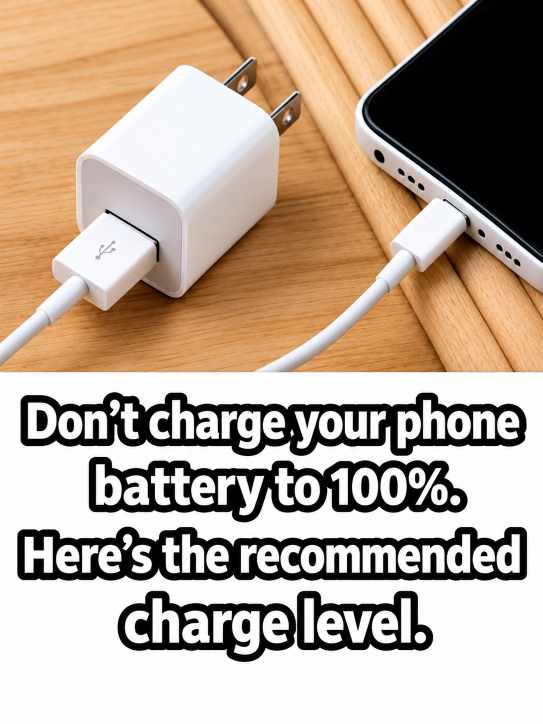
Most of us plug in our phones before going to bed and leave them charging until morning. It seems harmless, but did you know that keeping your phone battery at 100% for long periods can contribute to battery wear over time?
If you want your smartphone battery to last longer, a small change in your charging habits may help.
What Is the Best Battery Level?
For many smartphones with lithium-ion batteries, keeping the charge between 20% and 80% is a useful guideline for reducing battery stress.
You don’t need to follow this rule perfectly every day. The goal is simply to avoid keeping your battery at an extremely high or low charge level for long periods whenever possible.
Why Can Charging to 100% Affect Your Battery?
Your phone’s battery naturally loses some of its capacity as it ages. Certain conditions can speed up this process, including:
Staying at 100% for long periods: A high state of charge can put additional stress on the battery.
Excessive heat: Heat is one of the biggest factors that can accelerate battery aging.
Frequent deep discharges: Regularly letting your phone run completely out of power can also contribute to battery wear.
Charging your phone to 100% occasionally is perfectly fine. You don’t need to worry if you need a full battery before leaving home.
5 Simple Ways to Protect Your Phone Battery
1. Try the 20%–80% Rule
When convenient, plug in your phone before it gets too low and unplug it around 80%. Treat this as a guideline, not a strict requirement.
2. Turn On Optimized Charging
Many iPhones and Android phones offer optimized charging or a battery protection setting. These features can help reduce the time your battery spends fully charged.
3. Keep Your Phone Cool
Avoid charging your phone in direct sunlight or leaving it in a hot car. If your device becomes unusually hot while charging, check the charger, cable, and charging environment.
4. Use a Reliable Charger
Choose a reputable charger and a compatible cable. Poor-quality or damaged charging accessories may create safety risks.
5. Don’t Stress About Every Percentage
Your phone is designed for everyday use. If you need 100% to get through a busy day, charge it fully. Convenience matters, too!
Should You Stop Charging Overnight?
Not necessarily. Modern smartphones have charging-management systems that help control charging, and many offer features designed to protect battery health. However, keeping a phone cool and enabling optimized charging can be beneficial if you regularly leave it plugged in overnight.
Before changing your overnight charging routine, there’s one important thing to remember: small adjustments can help, but you don’t need to obsess over every percentage.
The Bottom Line
You don’t have to change everything about how you use your phone. Simply avoiding excessive heat, using optimized charging, and aiming for around 20%–80% when practical can help preserve battery health over time.
And remember: charging to 100% isn’t automatically harmful. The goal is to reduce unnecessary battery stress, not to make charging another thing to worry about.
Did you already know about the 20%–80% battery guideline? Share this tip with someone who wants their phone to last longer!