Incredibly Delicious Pickled Vegetables Without Boiling: Everyone Will Ask for the Recipe!
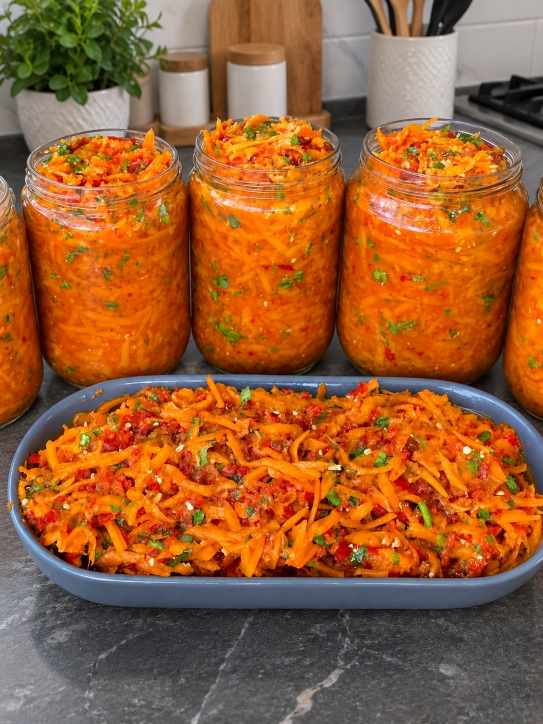
There’s no need to boil anything to prepare these delicious pickled vegetables. Everyone who tries them asks for the recipe, and even if you make 100 jars, they may still not be enough! This flavorful combination of carrots, red bell peppers, garlic, and vinegar makes a delicious accompaniment to a variety of meals.
Main Ingredients
- 2.5 kilograms of red bell peppers
- 1 head of garlic
- 3 kilograms of carrots
- 1 cup of oil (225 ml)
- Coarse salt, to taste
- Chili peppers, to taste
- Fresh parsley, to taste
- Vinegar, as required by a tested pickling recipe
Benefits of the Ingredients
Carrots: Rich in beta-carotene, which the body converts into vitamin A, carrots support normal vision, skin health, and immune function. Their dietary fiber also contributes to healthy digestion.
Red bell peppers: Red bell peppers contain vitamin C, vitamin A precursors, and antioxidants that support normal immune function and help protect cells from oxidative stress.
Garlic: Garlic contains sulfur-containing compounds that have been studied for their potential cardiovascular benefits. However, it should not be considered a substitute for medical treatment.
Vinegar: Vinegar adds a tangy flavor and helps preserve vegetables when used at an appropriate acidity level in a reliable pickling recipe.
Step-by-Step Preparation
1. Grate the Carrots
Grate the carrots using a coarse grater. Place them in a large bowl, add coarse salt, and mix thoroughly with your hands or a clean utensil until they begin to release their juices.
2. Chop the Peppers and Garlic
Chop the red bell peppers, chili peppers, and garlic in a food processor. Pulse until the ingredients reach your preferred consistency.
3. Combine the Ingredients
In a large bowl, combine the grated carrots with the chopped peppers and garlic. Add the parsley, vinegar, and oil, then mix everything thoroughly until the ingredients are evenly distributed.
Now comes the resting stage, when the flavors begin to blend and the vegetables release additional juices.
4. Let the Mixture Rest
Allow the mixture to rest for 1 to 2 hours in the refrigerator. This gives the flavors time to develop and allows the vegetables to release more liquid.
5. Adjust the Seasoning
Taste the mixture and adjust the salt if necessary. For safe preservation, however, salt alone is not enough to prevent spoilage. Use a reliable pickling recipe that specifies the appropriate acidity and proportions of ingredients.
6. Fill the Jars
Transfer the mixture into clean, food-safe glass jars. Press it down gently with a clean utensil to remove air pockets. Follow a tested recipe for the correct amount of pickling liquid and ensure the vegetables are properly submerged.
7. Seal the Jars
Wipe the rims of the jars with a clean paper towel or cloth, then close them with suitable, clean lids. Make sure the lids fit securely.
8. Store in the Refrigerator
Place the jars in the refrigerator immediately. The flavors may continue to develop over time, but the mixture should not automatically be considered safe after three weeks simply because it has been refrigerated. Follow a tested refrigerated-pickle recipe for safe preparation and storage.
Tips and Recommendations
- Use clean jars and utensils: Wash all equipment thoroughly before preparing the vegetables to reduce the risk of contamination.
- Adjust the heat: If you prefer a milder flavor, reduce the quantity of chili peppers.
- Keep the vegetables submerged: Follow a reliable recipe to ensure the vegetables remain covered by the appropriate pickling liquid.
- Refrigerate promptly: Do not store this uncooked vegetable mixture at room temperature unless you are following a validated preservation process.
- Check for spoilage: Discard the contents if you notice mold, unusual odors, unexpected bubbling, or other signs of spoilage. Never taste food that appears questionable.
- Follow safe storage guidance: The recommended storage period depends on the recipe, acidity, preparation, and handling. Do not assume the pickles will remain safe for two months without reliable guidance.
What to Serve with These Pickled Vegetables
These tangy, colorful pickled vegetables pair wonderfully with grilled meat, roasted dishes, fish, homemade bread, and fresh salads. The combination of crunchy carrots, sweet red peppers, garlic, and spicy chili creates a flavorful accompaniment that can brighten up everyday meals.
For the best texture and flavor, prepare an appropriate quantity, keep the jars refrigerated, and follow reliable food-preservation guidance. If you plan to store the vegetables for an extended period, use a tested pickling recipe rather than relying on taste or appearance alone.