The “Mystery” Object in the Photo: A Charcoal Box Iron
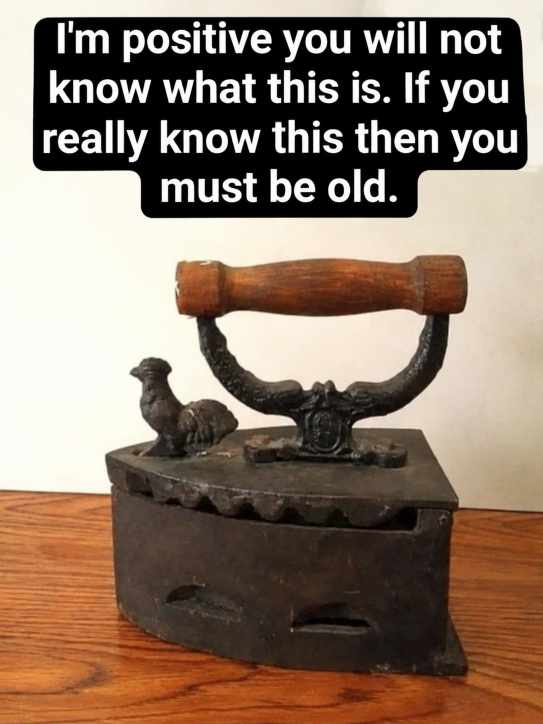
Long before modern electric irons, the charcoal box iron offered a clever solution to one of the most time-consuming household chores: ironing clothes. Using glowing charcoal as its heat source, this ingenious tool allowed people to keep their garments smooth and crisp for longer periods without constantly returning to the stove.
Distinctive Features of the Charcoal Box Iron
1. A Hollow Chamber for Charcoal
The iron featured a hollow interior designed to hold glowing charcoal. This built-in heat source helped maintain the temperature of the soleplate for longer than traditional solid irons, reducing the need for frequent reheating.
2. Hinged Lid with Decorative Latch
Often shaped like a rooster, bird, or floral motif, the latch was both decorative and functional. The hinged lid could be opened to add fresh charcoal or remove ash without having to replace the entire iron.
Fun fact: The rooster, a traditional symbol of vigilance and domestic order, was a popular decorative motif on some household objects, including certain antique irons.
3. Wooden Handle
Made from beech, oak, or other dense woods, the handle helped protect the user's hand from heat because wood is a relatively poor conductor of heat. This made the iron easier to handle during extended ironing sessions, although the handle could still become warm with prolonged use.
4. Air Vents and Scalloped Edges
Slots along the sides and decorative cutouts served practical purposes. The openings allowed air to circulate inside the chamber, helping the charcoal burn more steadily and maintain its heat.
5. Heavy, Smooth Soleplate
The heavy metal soleplate provided the flat, smooth surface needed to press wrinkles out of fabric. Its weight helped flatten garments, while the heat transferred from the charcoal made the ironing process more effective.
How It Was Used: A Delicate Dance with Fire
Using a charcoal box iron required patience, experience, and careful attention to temperature. The process generally involved several steps:
Heat the coals: Charcoal was lit in a small brazier or stove until the pieces were glowing.
Fill the iron: Using tongs, the hot charcoal was carefully placed inside the iron's hollow chamber.
Latch the lid: The hinged top was secured to help contain the heat and ash.
Test the temperature: The soleplate was checked before ironing. If it was too hot, the user allowed it to cool; if it was too cool, additional charcoal could be added.
Iron with care: The user pressed the fabric in controlled movements, replenishing the charcoal when necessary throughout the day.
Caution was essential: Excessive heat could scorch fabric, while insufficient heat made removing wrinkles difficult. Ash also had to be emptied regularly to reduce smoke, spills, and other hazards.
But what made this unusual iron such an important improvement over earlier designs? Its built-in heat source changed the way people approached an everyday household chore.
Why It Was Revolutionary
Before charcoal box irons became popular, many households relied on traditional solid irons, often called sad irons. These heavy blocks of metal were heated directly on a stove or hearth and gradually cooled during use.
To keep ironing, users had to return the irons to the heat source repeatedly or rotate between several irons. This meant frequent interruptions and considerable effort, especially when dealing with large amounts of laundry.
The charcoal box iron addressed this problem by carrying its own heat source. Because charcoal could continue producing heat inside the iron, it allowed for longer ironing sessions with fewer interruptions.
In an era when washing and pressing clothes could occupy much of a household's day, this design represented a practical improvement in domestic technology.
A Glimpse into Daily Life
Using a charcoal iron was about more than keeping linens crisp. It required skill, patience, and a careful understanding of heat.
Laundresses and other household workers had to manage the iron's temperature while protecting delicate fabrics from scorching. They also needed to handle hot charcoal and ash safely, making the task considerably more demanding than operating a modern electric iron.
Some households kept several irons available so that one could be used while another cooled or was reheated. Managing the charcoal, maintaining a suitable temperature, and cleaning out ash were all part of the routine.
Safety was especially important. Sparks, hot surfaces, and loose ash presented genuine risks, so these irons required attentive handling and were not suitable for unsupervised use by children.
Final Thought: Ingenuity in Every Detail
The charcoal box iron is more than an antique. It is a testament to human creativity and the effort people invested in solving everyday problems. Long before modern smart appliances, inventors developed practical solutions using simple materials such as iron, wood, and charcoal.
So, the next time you press a shirt with the flick of a switch, take a moment to appreciate the glowing coals, wooden handles, and decorative rooster-latched irons that helped shape the history of household technology.
Some of the most remarkable inventions are not necessarily high-tech. Sometimes, they are simply clever solutions to ordinary challenges.
Have you ever seen a charcoal box iron in a museum or antique shop? Share your experience and what you found interesting about this piece of history. If you enjoyed this glimpse into the past, consider sharing it with others. Sometimes, the quietest tools tell the most fascinating stories.