No More Bland Watermelons! Here’s a Simple Visual Guide to Finding the Sweetest Fruit at the Market
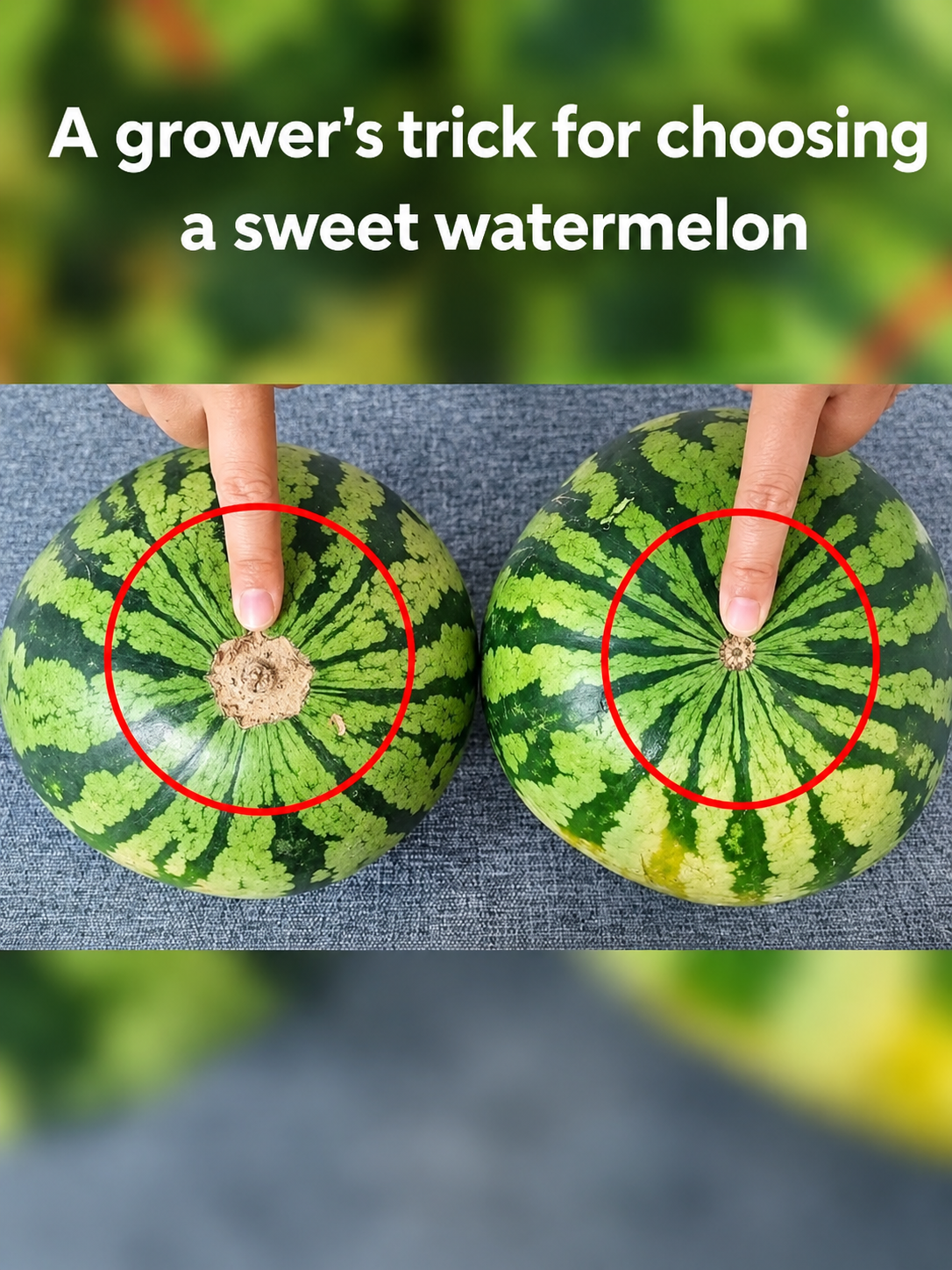
Today we’ll be talking about an iconic summer fruit: watermelon. As temperatures rise, these large, juicy fruits fill the markets. There’s nothing better than a refreshing, ice-cold watermelon to cool off. Unfortunately, choosing a sweet watermelon can be difficult, and no one likes to discover they’ve spent their money on a bland one.
Fortunately, there are simple ways to help you choose a ripe and flavorful watermelon. Here are a few useful signs to look for when selecting your next one.
Look at the Outside of the Watermelon
The first thing to notice is the color. A ripe watermelon often has a dull green appearance without excessive shine. The green should generally be relatively dark. On the other hand, if the watermelon has a grayish hue or is very light green, it may not be as ripe or flavorful.
Look at the Yellow Part of the Watermelon
The yellow area of the watermelon, often found on the base, can be a useful indicator of ripeness. This is the part that rests on the ground while the watermelon grows. A creamy yellow or yellow-orange spot can be a good sign that the fruit had time to mature.
On the other hand, a watermelon with a very pale or white ground spot may have been harvested before reaching full ripeness.
But the color of the rind and the ground spot are only part of the story—another visual detail can reveal even more about the watermelon you’re holding.Look at the Watermelon’s Marbling
Marbling or streaks on a watermelon can also provide clues about its quality. A watermelon with clear, well-defined markings may indicate that it has developed normally. However, appearance alone cannot guarantee sweetness, so it’s best to consider this sign together with the others.
Check the Watermelon’s Navel
A watermelon’s navel, or blossom end, can also vary in size and appearance. Some are large, while others are small. A small, well-formed navel is sometimes associated with a more mature fruit, although it should not be treated as a guaranteed indicator of sweetness.
A larger navel does not necessarily mean that the watermelon was picked too early or chemically treated. Ripeness and flavor depend on several factors, including the variety, growing conditions, and harvest timing.
Watermelon Selection Tips
When choosing a watermelon, look for a generally dull, dark-green rind, a creamy yellow ground spot, clear and natural-looking markings, and a firm, undamaged exterior. Using several signs together can give you a better chance of selecting a ripe and flavorful watermelon.