Mystery Solved! What That Odd Kitchen Gadget From the Thrift Store Actually Is
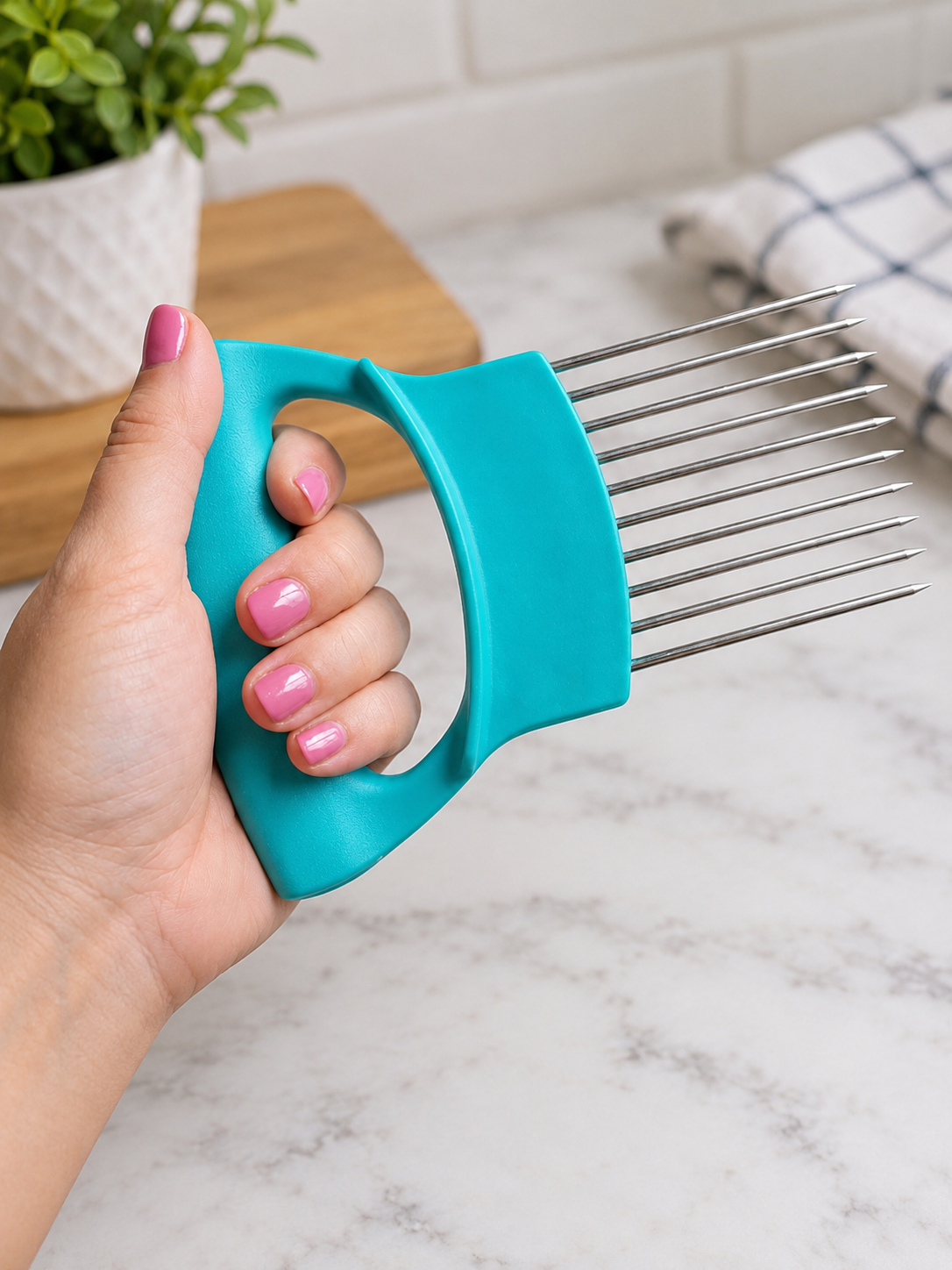
You’re not alone if you’ve ever pulled a strange, blade-filled contraption from a thrift store bag and thought: “What in the world is this?”
Chances are, you’ve found an onion and veggie slicer—a vintage or modern kitchen tool designed to make slicing onions, potatoes, cucumbers, and more fast, convenient, and uniform.
Let’s break down what it is, how it works, and why it might just deserve a spot in your kitchen.
What Is an Onion and Veggie Slicer?
It typically looks like a small plastic or metal base with sharp, parallel blades set into slots.
Some models have a hand guard, while others rely on you pressing the vegetable through with a pusher or your hand.
Purpose: To create even, thin slices of firm vegetables with minimal knife skills required.
Why It’s Useful, Especially for Onions!
Speed: Slice an entire onion in seconds, depending on the model and the size of the onion.
Consistency: The blades help produce slices of similar thickness, making the tool useful for caramelizing onions, frying, or preparing salads.
Safety: Some models include guards or pushers that help keep fingers away from the blades. These features can be particularly useful for beginners and people who have difficulty gripping a knife, although careful handling is still essential.
Control: It can work well with small or oddly shaped vegetables that are difficult to hold while slicing with a knife.
Bonus: Potentially Less Crying! Faster slicing may reduce the time you spend exposed to onion vapors, which can help limit eye irritation.
What You Can Slice With It
An onion and veggie slicer can be useful for preparing several firm fruits and vegetables, depending on the blade spacing and design.
- Onions: Yellow, red, and white onions.
- Potatoes: For homemade chips or scalloped dishes, provided the potatoes are not too hard for the slicer.
- Cucumbers: For pickles or fresh salads.
- Zucchini and summer squash: For roasting, grilling, or other recipes.
- Apples: For pies, snacks, and fruit salads, if the slicer is suitable for the fruit's firmness.
- Carrots: Smaller or thinner carrots may work, depending on the tool's design.
Avoid: Soft fruits and vegetables, such as bananas and ripe tomatoes, which may get crushed rather than sliced. Very hard roots, such as sweet potatoes and beets, can also be difficult to cut safely with some models. Avoid vegetables with tough cores or any food that does not fit securely into the slicer.
How to Use It Safely and Effectively
Because the blades are sharp, using the slicer correctly is essential. Follow these steps for better results:
- Place the slicer on a stable surface. A secure, nonslip surface can help prevent it from sliding during use.
- Prepare the vegetable. Trim the ends so the vegetable sits securely, and cut it into a manageable size if necessary.
- Use the provided pusher or hand guard. Press the vegetable firmly and evenly through the blades without placing your fingers near the cutting edges.
- Clean it promptly. Rinse the slicer soon after use, following the manufacturer's cleaning instructions, because food can quickly become lodged between the blades.
- Dry it thoroughly. This helps prevent rust on metal components and reduces lingering moisture and odors on plastic parts.
Pro Tip: Sprinkle sliced onions with a pinch of salt to help draw out moisture and balance their sharp flavor. This can be especially useful when preparing onions for certain salads or cooked dishes.
Found One at a Thrift Store? Clean It Well!
A secondhand kitchen gadget can be a great bargain, but it deserves a careful inspection before you use it to prepare food.
If you found an onion slicer at a thrift store, here is how to get it ready for use:
- Wash it thoroughly: Use warm water and dish soap, provided the manufacturer's instructions allow it.
- Scrub between the blades: An appropriate cleaning brush can help remove trapped food and dirt. Handle the blades carefully to avoid cuts.
- Sanitize it properly: Use a food-contact-safe sanitizing method suitable for the material, following the product's instructions. If using a diluted bleach solution, follow the correct dilution and contact time, and never mix bleach with vinegar or other cleaning products.
- Inspect the blades: Check for rust, corrosion, cracks, loose components, or damaged cutting edges. If the tool cannot be cleaned properly or is damaged, do not use it for food preparation.
Before you put that thrift-store find to work, there is one more thing worth knowing: how does it compare with other popular slicing tools?
Onion Slicer vs. Mandoline vs. Chef’s Knife
Each tool has its own advantages and drawbacks. The best choice depends on what you are preparing, how often you cook, and how comfortable you are handling sharp blades.
Onion and Veggie Slicer
Pros: Simple to use, often inexpensive, convenient for repetitive slicing, and potentially easy to clean when the design allows access between the blades.
Cons: Usually offers limited slice thicknesses and may not work well with soft foods or vegetables that are too hard for its blades.
Mandoline
Pros: Often provides adjustable slice thicknesses and can handle a wide range of vegetables and fruits.
Cons: Its exposed blades can cause serious cuts if used carelessly. Cleaning can also be challenging, and a hand guard should be used whenever provided.
Chef’s Knife
Pros: Offers excellent control, handles many different ingredients, and does not require an additional gadget.
Cons: Requires practice and proper technique. Slicing large quantities can take longer, and cutting onions with a knife may expose you to irritating onion vapors for a longer period.
Final Thought
That odd little gadget isn’t necessarily junk—it could be a practical, time-saving kitchen helper from an era that valued simple solutions. While it may not replace a knife for every task, it can be useful for quick weeknight preparation or for anyone who dreads slicing onions.
So, next time you see one at a thrift store for a dollar, take a closer look. If it is in good condition, can be cleaned thoroughly, and suits your cooking needs, it might be worth bringing home.
Sometimes the simplest tools solve the oldest problems.
Have you used an onion slicer? Do you love it or prefer a traditional knife? Share your experience below—we’re all decoding kitchen mysteries together!