Pulled My Beef Roast Out of the Slow Cooker and Saw These Weird White Stringy Things Poking Out of the Meat. They Look Like Little Worms or Parasites
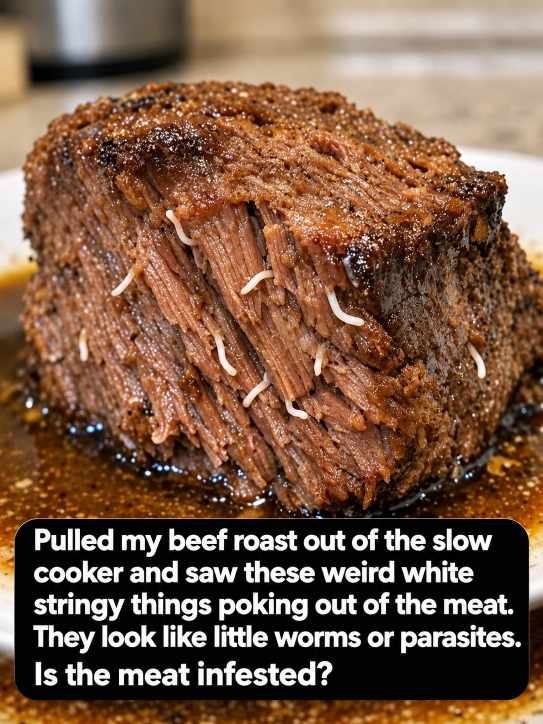
Before you throw away your hard work in a panic, it’s important to take a closer look at what you’re seeing. These white, stringy bits might not be what you fear. In fact, they are often a normal part of the meat’s structure or a result of the cooking process. This article explains what these white strings likely are, why they appear, and when you should be concerned.
Why Those White, Stringy Bits Probably Aren’t Worms
It’s natural to be concerned if you see something unexpected in your food, especially if it resembles worms or parasites. However, in many cases, these white, stringy bits are parts of the meat’s structure known as connective tissue. Connective tissue contains proteins like collagen, which is common in beef roasts and can become stringy or gelatinous after slow cooking.
Parasites are not the most likely explanation for white strings in cooked beef. However, their absence cannot be confirmed by appearance alone. Proper cooking helps reduce food safety risks, but if the material looks distinctly unusual or you cannot identify it, it is best to avoid eating the meat until you can determine what it is.
Understanding Muscle Fibers and Connective Tissue in Beef
Muscle fibers and connective tissues are integral parts of any cut of meat. Muscle fibers form the main portion of the muscle, while connective tissues hold these fibers together and attach muscles to bones. Beef contains varying amounts of connective tissue, much of which is composed of collagen.
When these tissues are cooked, especially in a slow cooker, collagen gradually breaks down into gelatin, contributing to the tender texture and rich flavor of the meat.
This process is particularly noticeable in cuts like chuck roast and brisket, which contain substantial connective tissue. The resulting strands and soft, pale material are often a natural result of cooking rather than signs of spoilage or infestation.
What Slow Cooking Does to Meat Structure
Slow cooking uses relatively low temperatures over an extended period to soften tough muscle fibers and connective tissues. During this process, collagen gradually transforms into gelatin, helping make tougher cuts of beef tender and flavorful.
As the meat cooks, connective tissue can become more visible on the surface or throughout the interior. Depending on the cut, the lighting, and the degree of cooking, these structures may look like white or pale strings.
The moist environment of a slow cooker is well suited to this transformation, making it a popular method for preparing tougher cuts of meat. However, the appearance of the strands alone cannot establish whether a roast is safe to eat.
But connective tissue is only part of the explanation—there is another reason those pale strands can suddenly become more noticeable as your roast cooks.
How Contracting Fibers Can Suddenly “Pop Out” of a Roast
During cooking, muscle fibers contract and lose moisture. As the meat changes structure, connective tissues that were previously hidden can become exposed or more prominent.
This effect is more noticeable in cuts containing substantial connective tissue or visible bands of fat and collagen. The strands may appear to protrude from the surface or separate from the surrounding meat as it becomes tender.
Although this can look alarming, exposed connective tissue is a normal feature of many slow-cooked roasts. Heat changes the structure of the meat, making some components easier to see and pull apart.
Normal White Strings Versus True Parasites: Key Visual Differences
White strings in cooked beef can be difficult to identify by appearance alone, but some general characteristics may help explain what you are seeing.
Connective tissue often appears as irregular strands, bands, or soft, pale material running through the meat. After prolonged cooking, it may become tender, gelatinous, and easy to separate with a fork.
Other unusual structures may have a different appearance, but visual inspection is not a reliable way to rule out parasites or other contamination. If the material resembles a distinct organism, has an unfamiliar structure, or remains unexplained, do not assume it is harmless connective tissue.
Commercially sold beef is generally subject to food safety controls, but these measures do not make every possible contamination risk impossible. When in doubt, avoid consuming the questionable portion and consult a qualified food safety professional or the retailer.
When to Worry: Smell, Color, and Texture Red Flags
Although white strings may be normal connective tissue, other signs can indicate that meat has spoiled or been handled improperly.
Pay attention to the following warning signs:
- Unpleasant odor: A sour, rancid, or otherwise distinctly foul smell can indicate spoilage.
- Unusual texture: A slimy or sticky coating that is not explained by the cooking juices may be a warning sign.
- Unexpected discoloration: Unusual greenish patches or other abnormal colors deserve caution, particularly when accompanied by an unpleasant smell or abnormal texture.
- Uncertain storage or cooking: Meat that has been stored improperly or has not reached a safe internal temperature may pose a food safety risk even if it looks and smells normal.
Remember that normal appearance and smell do not guarantee safety. Harmful bacteria may be present without obvious signs of spoilage. If you suspect that the roast is spoiled or contaminated, the safest choice is to discard it rather than taste it to check.
Safe Cooking Temperatures for Beef
Cooking beef to the appropriate internal temperature is an important part of reducing the risk of foodborne illness. For whole cuts of beef, the USDA recommends a minimum internal temperature of 145°F (63°C), followed by a three-minute rest period.
Slow-cooked roasts may reach higher temperatures during several hours of cooking, but the actual temperature depends on the appliance, the size of the roast, and the cooking conditions. Use a food thermometer to check the temperature in the thickest part of the meat.
Ground beef has a different recommended minimum internal temperature of 160°F (71°C). These temperature guidelines help control foodborne pathogens, but safe cooking does not make spoiled meat safe or guarantee that every possible parasite or contaminant has been eliminated under all circumstances.
Once you understand the role of temperature, it becomes easier to see why certain cuts of beef develop these unusual-looking strands more often than others.
Common Cuts of Beef Most Likely to Show These White Strings
Some cuts of beef are more likely to display pale strands and bands because they contain more connective tissue. Common examples include:
- Chuck roast: A flavorful cut from the shoulder that contains connective tissue and benefits from slow cooking.
- Brisket: A cut with substantial connective tissue that becomes tender when cooked slowly over an extended period.
- Round roast: A leaner cut that may contain visible connective tissue and muscle fibers, depending on the specific section.
These cuts are popular for slow-cooking recipes because extended cooking helps soften their tougher structures. Pale strands within these cuts may simply be connective tissue, although unusual material should not automatically be dismissed without considering the meat's overall condition and handling history.
What Butchers and Food Scientists Explain About This Phenomenon
The structure of beef helps explain why white strands can appear during cooking. Muscle fibers, collagen-rich connective tissue, and fat all respond differently to heat.
As collagen breaks down, it contributes to the soft, gelatinous texture associated with tender slow-cooked beef. Meanwhile, muscle fibers change shape and lose moisture, sometimes making connective tissue more visible.
Understanding these changes can help home cooks recognize common features of cooked meat without immediately assuming that something is wrong. Nevertheless, appearance alone cannot confirm the identity of every unusual strand or establish that a particular roast is safe to eat.
How to Trim, Prepare, and Cook Roasts to Minimize the “Ick” Factor
If the appearance of connective tissue puts you off, a few preparation techniques may help make your roast more appealing.
- Trim excess connective tissue: Before cooking, remove thick, tough bands of silverskin or excess fat where appropriate. Some connective tissue is beneficial for flavor and tenderness, so avoid removing too much.
- Sear the meat: Browning the roast before slow cooking can improve its surface color and add flavor, although it does not eliminate food safety risks.
- Choose an appropriate cooking method: Cuts with substantial connective tissue generally benefit from longer cooking times that allow them to soften.
- Use a suitable marinade: Certain acidic or enzyme-containing marinades can affect the surface texture of meat, but they will not reliably eliminate all connective tissue or make unsafe meat safe.
- Keep the lid properly fitted: Following the slow cooker's instructions helps maintain the intended cooking conditions and retain moisture.
These steps can improve the texture and appearance of a roast, but they cannot guarantee that unusual material will not appear during cooking.
When to Toss the Roast and When It May Be Safe to Eat
If the white strings have the appearance of ordinary connective tissue, the beef has been stored and handled safely, and it has reached the appropriate internal temperature, the strands may simply be a normal part of the meat. Connective tissue itself is a natural component of beef and is not inherently harmful.
However, do not rely on the appearance of the strings alone to make your decision. If the material looks distinctly like an organism, cannot be identified, or appears alongside signs of spoilage, avoid eating the roast. The same applies if the meat has been stored improperly or its cooking history is uncertain.
When you cannot confidently determine whether the material is normal connective tissue, the safest option is to set the meat aside and seek advice from a qualified food safety professional or the retailer. If spoilage or contamination is suspected, discard the roast rather than tasting it.
Seeing white, stringy material in a slow-cooked beef roast can certainly be unsettling, but connective tissue is a common explanation. Understanding how collagen and muscle fibers change during cooking can help you recognize normal features of beef while remaining alert to genuine food safety concerns.